
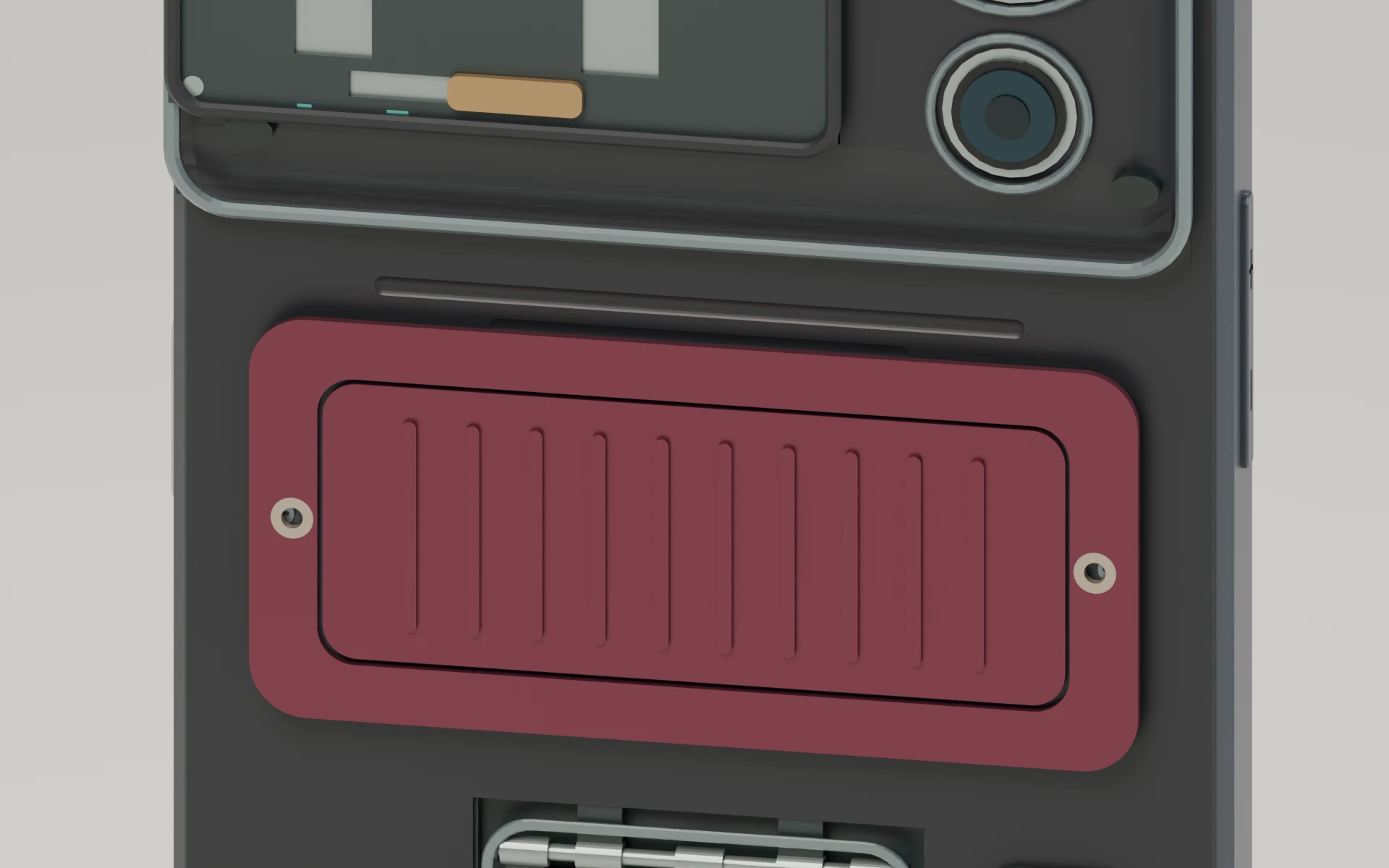
Photograph a glossy page
The reader sits beside the phone camera. Its captive shutter supplies a dark reference. The proposed trial counts retakes under the same lamp and compares them with the ordinary camera preview.
Devices / myGrove service study
In the digital myGrove assembly the service opening is wide enough for the optical cassette. Its position still puts an edge in the cassette’s path. A maintenance drawing needs to show where that happens.
Digital clearance study. Inspect the removal path in the model. A physical trial should include the open door and the connected cable so a technician can report where the cassette first catches.
Trace the myGrove removal path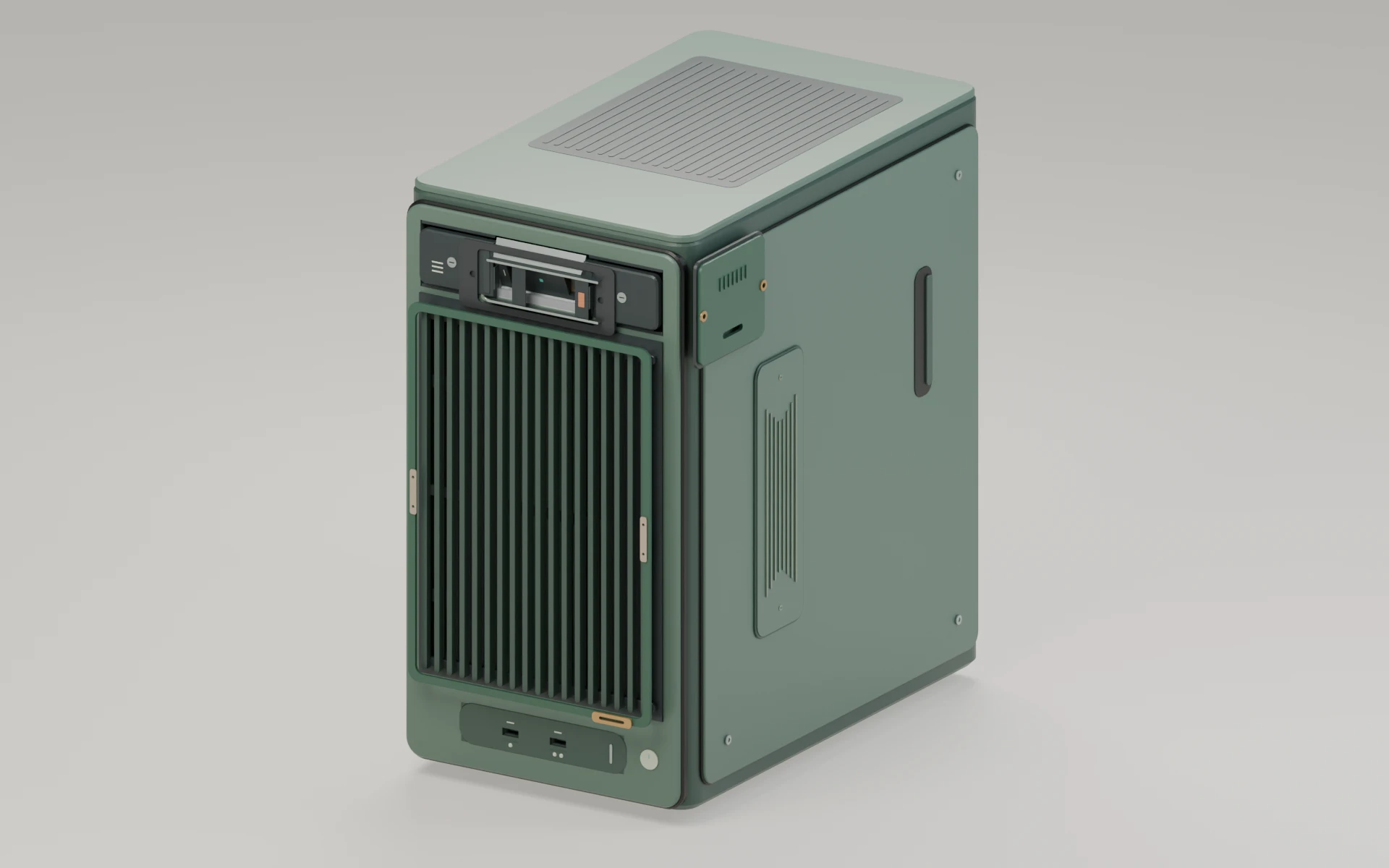
Digital extraction study
Lay the cassette outline over the opening, then follow it from its seated position to the outside. A width check passes. Following the path reveals where the frame gets in the way.
of the cassette’s projected envelope extends past the front edge. The next fit trial has to follow the full removal path, with the door released and cable in place.
The reader sits beside the phone camera. Its captive shutter supplies a dark reference. The proposed trial counts retakes under the same lamp and compares them with the ordinary camera preview.
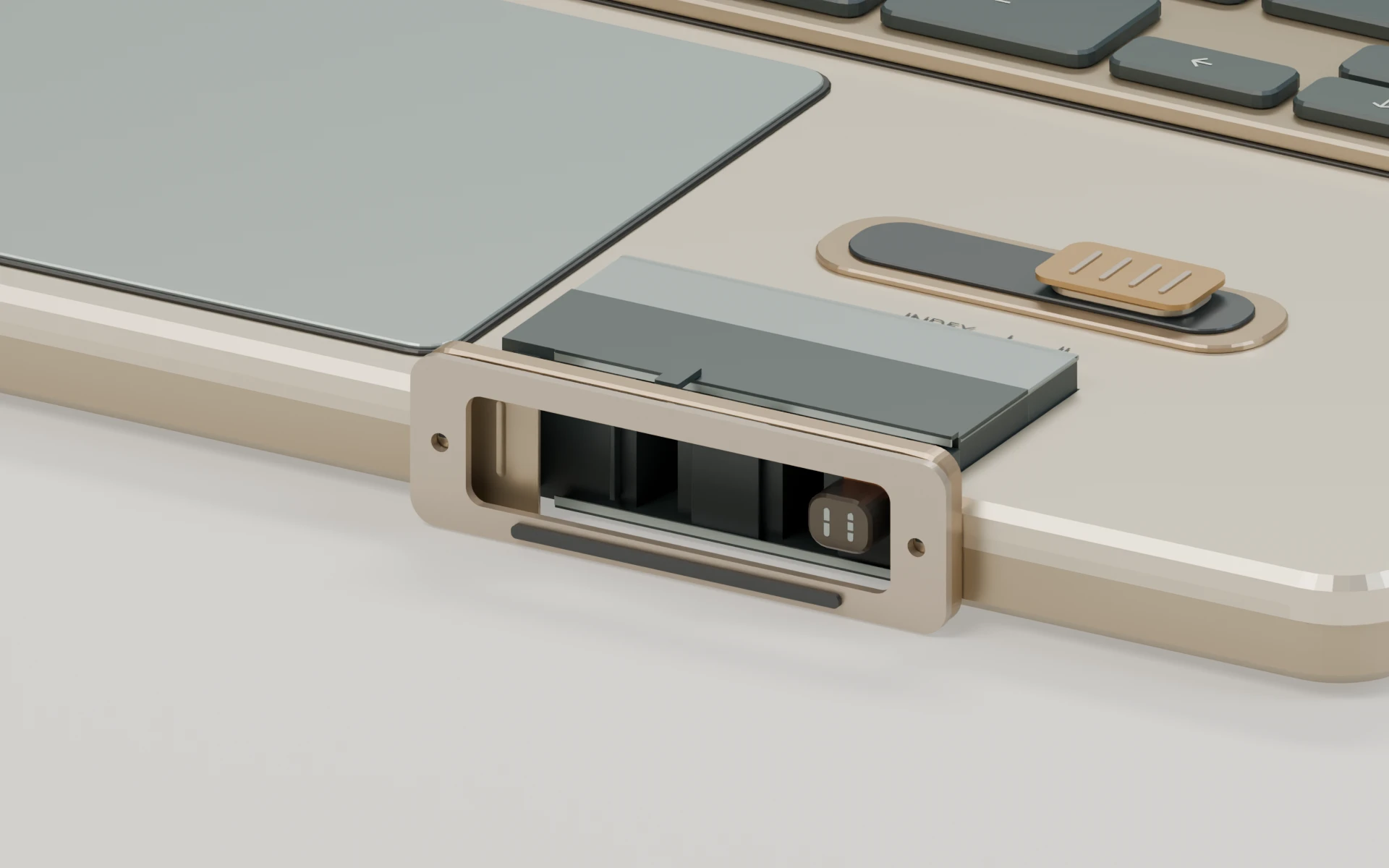
An optical rail stays in the notebook base as the display tilts. A desk trial will ask whether its reading helps a writer move a lamp out of the shadow of their hand.
F1 / Physical measurements pending
A 25 × 25 mm square and a 50 × 12.5 mm slot each sit in a 25 mm deep channel. For each shape, the bench sequence compares the channel to its own thin mask, then repeats the reading after reseating. The receiving engineer first records the mounting pattern on the stage that actually arrives.
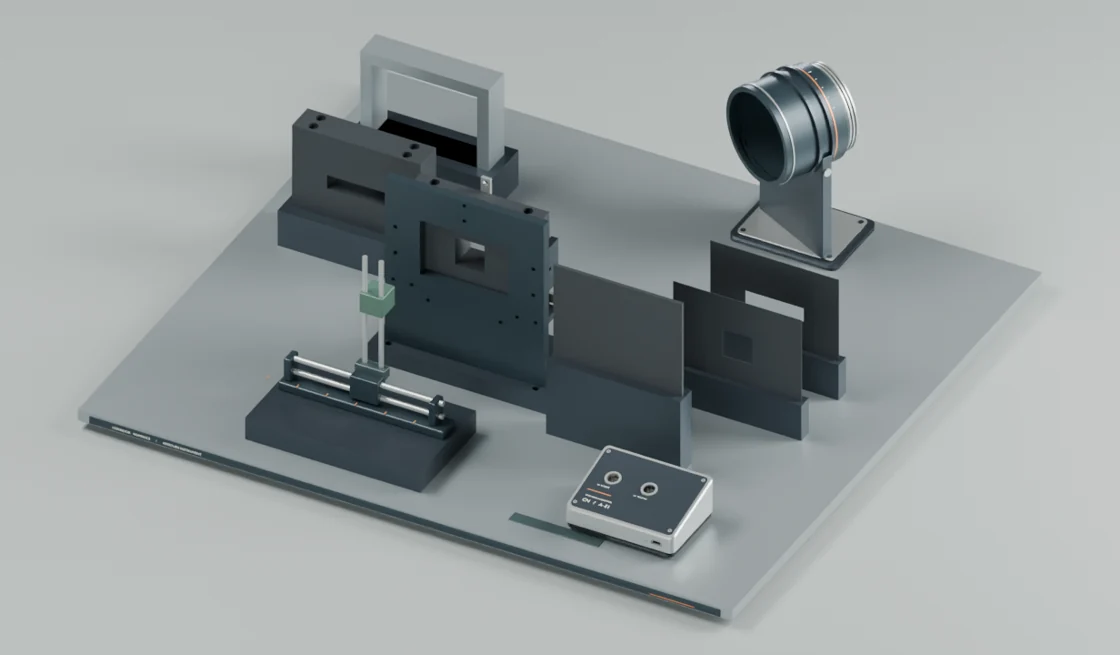
Raven Lab explores reseating an aperture against a reference. Raven Lab Studio asks what the next operator needs to recover the state of a measurement sequence. Both are design studies.